


Can Muslims rely on Artificial Intelligence (AI) for Islamic questions and answers?
In brief:
- • AI can be a helpful starting point for religious questions, but its answers should not automatically be treated as authoritative religious guidance.
- • When AI gives a religious answer, practise tabayyun: check Quranic verses, hadith and religious claims against trusted sources, consider whether important context is missing and consult ARS-recognised asatizah (religious teachers) when the question involves a religious ruling or your personal circumstances.
The way we look for answers has changed. Not too long ago, a question about our faith might have meant looking through a book, searching for an article or asking an Ustaz or Ustazah. Today, some of us might simply type the question into an AI tool.
Perhaps we want to understand the meaning of a Quranic verse, find out whether something is permissible, or learn more about an Islamic concept. Within seconds, AI can provide a detailed answer, sometimes complete with Quranic verses, hadith and references. AI can be a useful starting point for exploring what we want to learn more about. But when the question is about our faith, we should take one more step: checking whether the answer is something we can rely on.
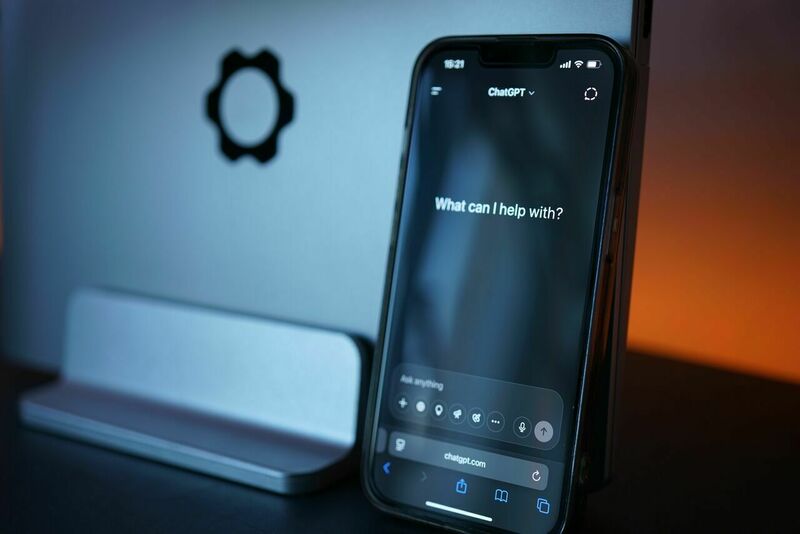
AI may be new, but the need to verify what we hear, see and read is not. This brings us to the principle of tabayyun: carefully verifying and seeking clarity about the information we receive.[1] It is a principle that remains relevant today as the way we access information changes.
Allah s.w.t. says,
يَـٰٓأَيُّهَا ٱلَّذِينَ ءَامَنُوٓا۟ إِن جَآءَكُمْ فَاسِقٌ بِنَبَإٍ فَتَبَيَّنُوٓا۟ أَن تُصِيبُوا۟ قَوْمًا بِجَهَـٰلَةٍ فَتُصْبِحُوا۟ عَلَىٰ مَا فَعَلْتُمْ نَـٰدِمِينَ
Ya ayyuhal-latheena amanoo in jaa-akum fasiqun binaba-in fatabayyanoo an tuseeboo qawman bijahalatin fatusbihoo ‘ala ma fa’altum naadimeen
“O believers, if an evildoer brings you any news, verify (it) so you do not harm people unknowingly, becoming regretful for what you have done.”
Tabayyun: Verify before you trust or share
Generative AI is strikingly confident in how it responds. Ask a religious question and the answer may be neatly explained, logically structured and supported by what appears to be a Quranic verse or hadith. Naturally, that can make the response feel credible.
Yet an answer can sound convincing and still be incomplete or inaccurate. A Quranic verse or hadith may be quoted incorrectly, or in some cases, fabricated entirely. Generative AI can also produce citations that sound authentic but do not actually exist. This is sometimes referred to as AI “hallucinations”.[2] A 2025 study evaluating five AI-powered Islamic chatbots across 80 questions on Islamic law found instances of misattributed Quranic verses and hadith, alongside oversimplified rulings and inconsistent responses.[3]
Unlike a book or an authoritative religious source, an AI response is generated by the system. A well-written answer does not mean the information is correct. This is why we should develop the habit of pausing before we believe, act on or share what AI gives us.
Ask: Where did this information come from? Can we verify it from the original source? Is there important context that has been left out? Does this require someone with relevant expertise?
Tabayyun also asks us to keep our thinking active. AI can help us find and understand information, but a confident or well-written answer is not necessarily a correct one. AI can support our thinking, but we still need to reflect on what it gives us.
The same tabayyun principle applies beyond AI. An Instagram post, TikTok video or WhatsApp message is not automatically reliable simply because it has been shared by many people or appears frequently on your feed; repetition is not verification.
Allah s.w.t. reminds us,
وَلَا تَقْفُ مَا لَيْسَ لَكَ بِهِۦ عِلْمٌ ۚ إِنَّ ٱلسَّمْعَ وَٱلْبَصَرَ وَٱلْفُؤَادَ كُلُّ أُو۟لَـٰٓئِكَ كَانَ عَنْهُ مَسْـُٔولًا
Wala taqfu ma laysa laka bihi ‘ilmun. Innas-sam’a wal-basara wal-fu-aada kullu oolaa-ika kaana ‘anhu mas-oola
“Do not follow what you have no (sure) knowledge of. Indeed, all will be called to account for (their) hearing, sight, and intellect.”
Why religious answers are not always straightforward
Part of AI’s appeal is that we do not have to wait. We ask and it answers.
That convenience can be genuinely useful. But perhaps it can also shape what we have come to expect from knowledge itself: that every question should have an immediate and straightforward answer. Religious knowledge does not always work that way.
There is a reason for this that goes beyond caution. It is rooted in how Islamic scholarship has always understood knowledge itself: not as information retrieval, but as a moral and spiritual pursuit tied to intention and accountability before Allah.

Consider a well-known example. Two men separately asked ‘Abdullah ibn ‘Abbas, a companion of the Prophet s.a.w, whether someone who had killed a believer could be forgiven, and he gave two different answers. To the man he suspected was contemplating murder, he said no, to deter him. To the man who had already killed and was seeking repentance, he said yes, to encourage him towards tawbah (repentance).[4] The ruling did not change because the text changed; it changed because the person did. That kind of discernment, reading not just the question but the person asking it, is something no amount of pattern-matching over text can replicate, because it is not a text problem to begin with.
Our Islamic tradition teaches us the value of patience and caution. Prophet Muhammad s.a.w. praised these qualities in a companion,
“Truly in you there are two qualities that Allah loves: patience and caution.”
(Sahih Muslim)
There may be different scholarly views to consider. Our circumstances may also affect how religious guidance applies. Even when a Quranic verse or hadith is quoted accurately, understanding its context and interpretation still matters. This becomes especially important when the question is not simply about learning what Islam says, but about what we should do in a particular situation.
Sometimes, taking more time with a question is part of seeking an answer well.
When should we speak to ARS-recognised asatizah?
Consider two different kinds of questions. You might ask AI, “What does Hasbunallah wa ni’mal wakil mean?” AI may be able to explain the general meaning and point you towards resources for further reading. But that is different from asking, “Do I need to make up this fast given my circumstances?”, “Does this particular financial arrangement comply with Islamic principles?” or “How does this religious ruling apply to my situation?” These questions may require more than a general explanation.
Our circumstances matter. And sometimes, where we live matters too. For example, Haj guidance may need to consider current health and travel requirements alongside religious principles. This does not mean that religious guidance from elsewhere is wrong. Sometimes, we simply need help understanding how it applies to our circumstances here in Singapore.
This is where speaking to ARS-recognised asatizah can help. They can ask about our circumstances, clarify relevant details and help us understand how religious principles apply to our situation. Knowing when we need further guidance is itself part of seeking knowledge.
🔍 View the MUIS directory of ARS-recognised asatizah
📍 Find out more about Muslim Religious Schools (MRS) and search for registered MRS through the MRS directory.
Allah s.w.t. reminds us,
وَمَآ أَرْسَلْنَا مِن قَبْلِكَ إِلَّا رِجَالًا نُّوحِىٓ إِلَيْهِم ۚ فَسْـَٔلُوٓا۟ أَهْلَ ٱلذِّكْرِ إِنْ كُنتُمْ لَا تَعْلَمُونَ
Wama arsalna min qablika illa rijalan noohee ilayhim fas-aloo ahla ath-thikri in kuntum la ta’lamoon
“We did not send (messengers) before you (O Prophet) except mere men inspired by Us. If you (polytheists) do not know (this already), then ask those who have knowledge (of the Scriptures).”
(Surah An-Nahl, 16:43)
Read: How to seek knowledge as a Muslim
Using AI responsibly goes beyond finding the right answer
How we use AI matters too.
- Niyyah (intention): Our niyyah matters in what we choose to use AI for. Are we using AI to help us learn, understand and explore? Or are we using it to avoid the effort of learning, or to find an answer that confirms what we want to hear?[5]
- ‘Aql (intellect): Our ‘aql reminds us to keep thinking rather than simply accepting what a tool produces. AI may help us organise the information we are searching for, explain it or point us to sources online, but we have a responsibility to think, reflect and question.
- Amanah (trust and responsibility): We should be mindful before uploading content into AI tools, especially private conversations and photographs. Practise digital discernment with the information we use and share.
- Tawakkul (reliance on Allah s.w.t): AI can support our effort, but it should remain a tool. As Muslims, we still seek Allah’s guidance, make our own effort and turn to people of knowledge when needed.
So, what can we do when AI gives us a religious answer?
We do not necessarily have to stop using AI to explore religious questions. Instead, some simple habits can help us approach the answers with greater care.
- Check the source. If AI gives you a Quranic verse, hadith or religious claim, check it against a trusted and authoritative source.
- Consider the context. Is AI presenting one scholarly view as though it is the only view? Consider whether there are circumstances that could affect how the guidance applies.
- Recognise when you need guidance. If the question involves a religious ruling or your personal circumstances, consider speaking to qualified asatizah. You can approach a Mosque Religious Office for religious guidance. You can also refer to the Asatizah Recognition Scheme (ARS) directory to check if an Ustaz or Ustazah is ARS-recognised.
- Consider the local context. If the issue is specific to Singapore, refer to MUIS fatwa and irsyad (religious guidance), as well as guidance from the Office of the Mufti.
- Pause before sharing. Before forwarding an AI-generated religious answer to family or friends, check that it is accurate and that important context has not been left out.
Conclusion: AI is new, but your responsibility is not
AI is likely to become an increasingly ordinary part of how we search, learn and make sense of the world around us. Religious knowledge, too, is more accessible than ever. But accessibility and reliability are not quite the same thing.

And this brings us back to tabayyun. Long before AI, Muslims were already taught to care about where information comes from, to seek clarity before accepting it, and to be mindful of what we pass on to others. Perhaps that is what makes tabayyun especially meaningful in the age of AI.
Technology may make answers easier and faster to find, but it should not replace our own effort to verify, reflect and seek guidance when needed. Our responsibility to approach knowledge about our faith with care remains.
And Allah s.w.t. knows best.
References:
[1] Islamic Religious Council of Singapore (MUIS). The Middle East Crisis Religious Leadership Advisory, p. 9, ‘Tabayyun in Dealing with Online Information.’
[2] IBM. 1 September 2023. AI hallucinations explained.
[4] Musannaf Ibn Abi Shaybah, 27182. Graded hasan (fair) by Ibn Hajar Al-Asqalani.
[5] Stanford Report. 26 March 2026. AI overly affirms users asking for personal advice.
Download the MuslimSG app on the App Store & Google Play. Articles on MuslimSG may be reproduced electronically or in print with prior permission from MuslimSG. Proper credit must be given to the author(s) and MuslimSG.
