


Honouring elders in Islam: What the Prophet s.a.w. teaches about respect and obedience
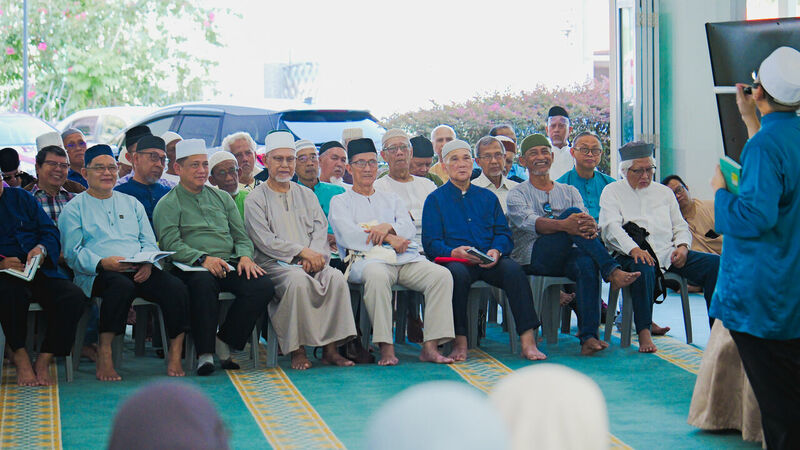
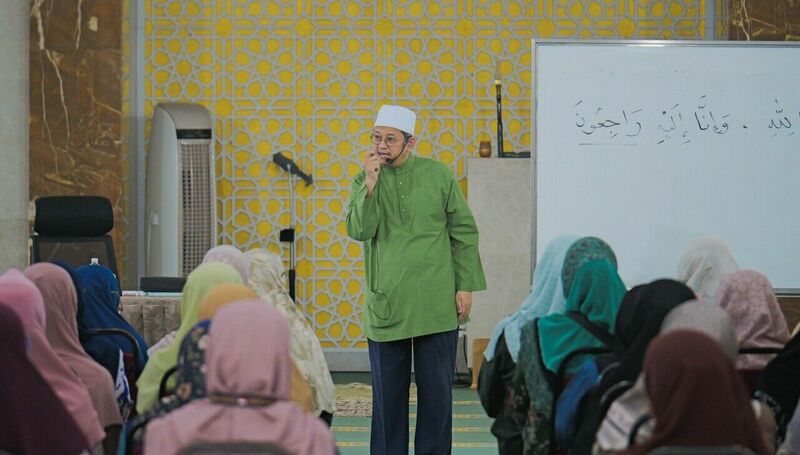
This article is the first in a series based on Kuliah 300 Hadith Bimbingan, delivered by Ustaz Mohamed Fatris Bakaram at Al-Muttaqin Mosque. The lecture is part of the Santunan Emas programme, which aims to promote well-being among seniors.
In Brief:
Islam teaches us to honour our parents and elders with respect and compassion, while recognising that obedience has its limits when it conflicts with Allah’s commands.
✓ Honour parents and elders with respect, compassion and kindness, and pray for Allah's mercy upon them.
✓ Remember that respect does not mean unconditional obedience, especially when it conflicts with Allah’s commands.
✓ Let love for Allah guide our worship, decisions and actions
In Islam, every human being, young or old, deserves respect and care. Elders are honoured and respected, while the young are loved and cared for. This balance reflects the values taught by Prophet Muhammad s.a.w, who said:
“He is not one of us who does not have mercy on our young and does not respect our elders.”
(Hadith narrated by al-Tirmidhi)
The Quran’s guide to caring for our parents
Allah s.w.t. further guides us in Surah Al-Isra, verses 23-24:
وَقَضَىٰ رَبُّكَ أَلَّا تَعْبُدُوٓا۟ إِلَّآ إِيَّاهُ وَبِٱلْوَٰلِدَيْنِ إِحْسَـٰنًا ۚ إِمَّا يَبْلُغَنَّ عِندَكَ ٱلْكِبَرَ أَحَدُهُمَآ أَوْ كِلَاهُمَا فَلَا تَقُل لَّهُمَآ أُفٍّ
وَلَا تَنْهَرْهُمَا وَقُل لَّهُمَا قَوْلا كَرِيمًا ٢٣ وَٱخْفِضْ لَهُمَا جَنَاحَ ٱلذُّلِّ مِنَ ٱلرَّحْمَةِ وَقُل رَّبِّ ٱرْحَمْهُمَا كَمَا رَبَّيَانِى صَغِيرًا
“And your Lord has decreed that you worship none but Him, and that you be good to your parents. Whether one or both of them reach old age in your lifetime, do not say to them a word of disrespect, nor scold them, but speak to them in terms of honour. And lower to them the wing of humility out of mercy, and say: ‘My Lord, have mercy upon them as they raised me when I was young.”
From these verses, the guidance on how we should treat our parents is clear:
- Do good to them
- Do not scold them or speak harshly to them
- Speak to them with respect
- Be humble and compassionate towards them
- Pray for Allah’s mercy upon them
While these verses speak specifically about our parents, Islam also teaches us to honour and care for our elders. When seniors are treated with respect, their experiences valued, and their needs are met with compassion, we help strengthen the bonds between generations. In turn, their sincere prayers, hopes, and guidance help carry this love and care forward.
This is also one of the aims of the Santunan Emas programme: to honour and care for our seniors, whose efforts and contributions have shaped what we enjoy today, while providing spiritual support for them and their caregivers.
When should we not obey others? A hadith on the limits of obedience
Respect and honour, however, do not mean unconditional obedience. Islam sets a clear boundary, laid out in another hadith:
“There is no obedience to any creation in disobedience to Allah.”
(Narrated by Imam Ahmad)
In other words, we should not obey anyone if doing so means disobeying Allah. "Creation" here means anything Allah s.w.t. has made, and scholars define it broadly as ‘everything other than Allah’. This includes not only other people, but also our own desires, feelings and circumstances that may influence us towards disobedience.
The principle is simple: nothing should lead us away from Allah’s commands or towards what He has forbidden. This could be someone telling us to steal, anger driving us to cause harm, greed tempting us towards unjust gain, envy leading us to wish harm upon others, or even feelings of despair that cause us to lose hope in Allah’s mercy.
Advice for parents
Parents should ensure that their advice and guidance to their children do not contradict Allah’s commands. They should also understand that honouring one’s parents does not mean that children must always follow their parents’ personal preferences.
At the same time, parents should be willing to listen to their children’s advice, suggestions, and decisions, especially when these come from genuine concern for the parent’s well-being.
Make the love for Allah your ultimate goal
The hadith on obedience is really a call to nurture love for Allah in our hearts. When this love is present, obeying His commands becomes an act of devotion rather than a burden, even when being tested. In times of hardship, remembering that Allah continues to bestow upon us countless blessings, even amid our trials, reminds us of His mercy, compassion and kindness.
No hardship endured in faith and patience is ever in vain, whether it is rewarded in this life or in the Hereafter. Every blessing we enjoy and every reward that awaits us is a reminder of Allah’s love for us, His servants.
Let the love for Allah s.w.t. be the driving force behind your worship, alongside our hope for His rewards and our fear of His punishment.
May Allah bless all readers, grant us strength to face all trials, guide us to distinguish truth from falsehood, and grant us relief and tranquillity from all pain and distress. Amin.
Santunan Emas is a collaborative programme that promotes active and meaningful ageing by nurturing seniors’ spiritual, physical, cognitive and social well-being.
Santunan Emas @ Al-Muttaqin Mosque
300 Hadith Bimbingan with Ustaz Mohamed Fatris Bakaram
Day: Every Wednesday
Time: 9:00 AM – 10:30 AM
Venue: Al-Muttaqin Mosque
Active Ageing Activities - from 11:00 AM
- Week 1: Light Exercises — Health Promotion Board (HPB)
- Week 2: Handicraft Workshop — Methodist Welfare Services (MWS)
- Week 3: Mental & Cognitive Exercises — Allkin Singapore
- Week 4: Adaptive Sports — Sun Love Active Ageing Centre (AAC)
Santunan Emas @ Darul Ghufran Mosque
Menggapai Akhiran Yang Mewangi with Ustaz Jamaluddin Abdul Wahab
Venue: Darul Ghufran Mosque
Time: 10:00 AM – 11:30 AM
Active Ageing Activities - Senaman Ibadah (Faith-Based Exercises) from 11:30 AM
Download the MuslimSG app on the App Store & Google Play. Articles on MuslimSG may be reproduced electronically or in print with prior permission from MuslimSG. Proper credit must be given to the author(s) and MuslimSG.