


When life gets hard: Finding healing, boundaries and renewal through Tawhid
قَالَ إِنَّمَا أَشْكُو بَثِّي وَحُزْنِي إِلَى اللَّهِ وَأَعْلَمُ مِنَ اللَّهِ مَا لَا تَعْلَمُونَ
Qala innama ashku baththi wa huzni ilallahi wa a'lamu minallahi ma la ta'lamun.
"He [Prophet Ya‘qub] said: "I only complain of my distraction and anguish to Allah, and I know from Allah that which you know not."
(Surah Yusuf, 12:86)
There are moments in life when the heart no longer knows where to turn. Not because the pain is new, but because it has finally been named. Many people only begin to recognise difficult family dynamics later in life. Once they do, an important question often follows: “What do I do now?”
For some, reading MuslimSG’s article “Navigating emotionally unavailable parents: Healing through faith, adab and healthy boundaries” brought relief. It gave words to experiences they had carried quietly for years. It affirmed that their pain was real, that adab (good conduct) does not demand silence in the face of harm, and that Tawhid (Oneness of Allah) does not ask us to lose ourselves in the name of obedience.
But for others, the experience was heavier. Yet recognising the problem is only the beginning. Once the heart begins to see clearly, it cannot easily return to what it once overlooked. Old memories may resurface, long-held assumptions may be questioned and new uncertainties begin to emerge.
If this is true, then what do I do now? How do I move forward without breaking what remains? How do I honour my parents without losing myself again? This is where many now find themselves not at the beginning of the journey, but at a threshold. A space between recognition and response. A space that feels uncertain, fragile, and at times, overwhelming.
It is here that the words of Prophet Ya’qub a.s. meet us not as a distant story, but as a lived reality. A father stretched between hope and loss, who did not deny his grief nor suppress his sorrow, but turned it towards Allah, “I only complain of my sorrow and grief to Allah…” This is not a sign of weakness. This is clarity. It is the recognition that pain, when held within the right relationship, becomes the beginning of healing.
However, the Quran does not leave us there. Rather, the Quran calls us not only to feel and rely, but also to move on. Allah says
... ۗإِنَّ اللَّهَ لَا يُغَيِّرُ مَا بِقَوْمٍ حَتَّىٰ يُغَيِّرُوا مَا بِأَنفُسِهِمْ...
“…Indeed, Allah will not change the condition of a people until they change what is within themselves…”
(Surah Ar-Ra'd, 13:11)
This verse is not a burden; it opens a door to hope placed upon the wounded. This verse invites and provides an opening. A reminder that while we may not have chosen the pain we carry, but with Allah’s help, we are not powerless in how we respond to it. This is where the journey shifts. Not away from Allah, but by walking towards Him. Not away from our past but through it.
This article is written for those who now find themselves in that space where awareness has come but are unsure of the next step. It is not a call to confront others immediately, nor does it promise quick resolutions to wounds that may have taken years to form. Healing does not unfold in haste. What it offers instead is a way to walk. A path rooted not only in emotional insight, but in the very framework through which Allah has structured human flourishing.
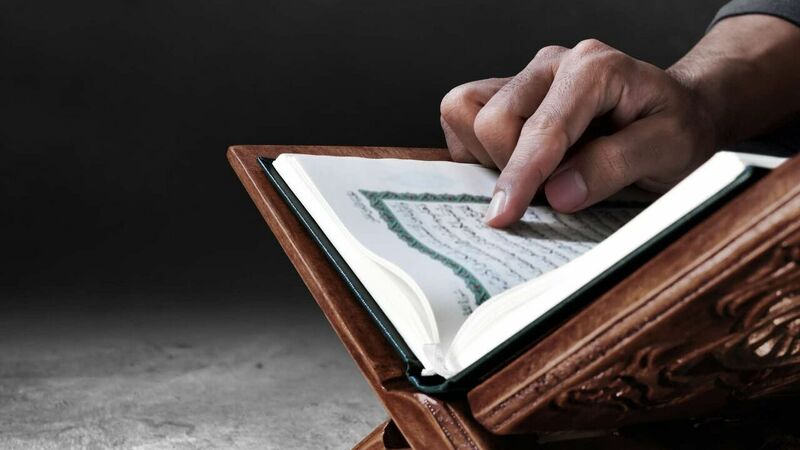
A path that honours your pain without allowing it to define you. A path that preserves your dignity while guiding your next steps.
Because the question is no longer simply, “What happened to me?”
The question now, is: “What do I do next without betraying my faith, my family, or myself?”
And perhaps more importantly: “How do I begin again with Allah and His Messenger?”
Not every wound will be resolved immediately. Not all relationships will return to what they once were. But no soul that turns to Allah with honesty and takes even a single step toward change is left without a path forward. And that path, if walked with care, is not only a journey of healing, it is also a journey of return.
Returning to the essentials – Healing through the five essentials (Daruriyyat al-Khams)
If the question now is “What do I do next?”, then the answer cannot begin with technique. It must begin with orientation.
Because healing, Iin the Islamic tradition, is not random, not left to personal intuition alone, nor is it constructed purely from modern frameworks of self-discovery. It is guided, structured and rooted in how Allah has designed the human being not only to survive, but to grow, to flourish, and to return to Him. For centuries, scholars of Islam have articulated this through the Maqasid al-Shariah (the higher objectives of Islamic law). At the heart of the maqasid are five essentials, known as the Daruriyyat al-Khams:
• Hifz al-din: which are the preservation and growth of our faith
• Hifz al-nafs: preserving our life and well-being
• Hifz al-‘aql: preserving sound understanding and intellect
• Hifz-al-nasl: preserving healthy family (lineage) and relationships
• Hifz al-maal: preserving wealth and the means to live with dignity
In this article, we focus on the first four because they are most closely connected to emotional and relational healing.
These essentials are not only about protecting what we have, but also about helping us growand it is rightly so. When they are violated, the human being begins to fracture. But the maqasid are not only about protection. They are also about growth. They are about nurturing what has been preserved and elevating it toward its fullest expression.
• To preserve din (religion) is not only to protect faith from distortion, but to grow in closeness to Allah.
• To preserve nafs is not only to ensure safety, but to cultivate a life that is emotionally and spiritually whole.
• To preserve ‘aql is not only to guard the mind from confusion, but to deepen understanding and wisdom.
• To preserve nasl is not only to maintain relationships, but to refine them into spaces of dignity, trust and mercy.
• To preserve maal is not only to avoid harm, but to build stability and capacity that allows a person to live with honour.
When we look at our own journeys through this lens, many begin to recognise something deeper. It is not simply that something hurt in the past. It is that something essential was disrupted both in its protection and in its ability to grow.
Safety may have been compromised. Trust may have been eroded. Our ability to think clearly, to feel securely, to relate with dignity may have been shaped by experiences that were inconsistent, confusing, or even harmful. In such cases, healing is not about becoming someone new. It is about restoring what Allah intended to be protected, nurturing what has been wounded, and allowing it to grow. This is where daruriyyat al-khams offers us a way forward. Not as an abstract theory, but as a map.1
A way of asking, gently and honestly is what within us needs protection and what within us is now ready to grow? And at some point, this question becomes personal. Not in a way that burdens but in a way that opens. What within you needs protection now?
What within you is asking to grow, perhaps for the first time? When seen in this light, healing is no longer something external to the religion. It is an expression of it. Each step we take to restore safety, clarity, dignity and connection is not a step away from faith. It is a step deeper into it.
And each step you take to grow beyond what once limited you is not rebellion. It is alignment with what Allah has intended for the human soul. And perhaps this is the most important shift at this stage of the journey. We are not merely recovering from harm. We are being invited into growth. You are not “fixing yourself” in isolation. You are participating in a process that Allah Himself has already outlined. You are not walking aimlessly. You are returning and rising.
In the sections that follow, we will begin to translate these essentials into practical steps. Not in a rigid or overwhelming way, but in a manner that allows you to move at your own pace, grounded, aware, and anchored in Tawhid. Because healing, when rooted in what Allah has preserved and what He calls us to grow is not only possible, but also purposeful.
1. Safety before change: Preserving and growing the self (Hifz al-nafs)
Before relationships can be repaired, something more fundamental must be restored: a sense of safety.
In the Islamic tradition, hifz al-nafs (the preservation of life) is among the highest objectives of the shariah (Islamic law). It is not limited to physical survival. It also includes protecting our emotional, psychological and spiritual well-being, all of which are part of the trust (amanah) Allah has entrusted to us.
A life that is constantly in fear, confusion, or distress is not a life that can fully turn to Allah with presence. Many of us have learned, consciously or unconsciously, to minimise what we feel. To endure without naming our pain. We remain in situations that quietly erode us, believing this is what patience (sabr) or birr al-walidayn (honouring our parents) requires. Over time, the body adapts. The mind adjusts. The heart learns to silence itself.
We continue, not because we are at peace, but because we have learned to survive. Yet survival is not the goal.

The shariah does not merely seek to keep us alive. It seeks to preserve the conditions that allow life to be lived with dignity, clarity and connection to Allah. And from that preservation, it calls us toward growth. This is where many of us need to pause and ask honestly: Am I safe? Not only physically, but emotionally, psychologically and relationally. Do certain conversations consistently leave me anxious, drained or diminished? Do we find ourselves shrinking, second-guessing, or bracing for criticism or dismissal? These are not insignificant feelings. They may be signs that something within hifz al-nafs has been compromised. Recognising this is not an act of rebellion. It is an act of honesty.
At this stage of the journey, the goal is not to immediately fix relationships or confront others. The goal is to stabilise the self. To create space where the heart can begin to breathe again. This may begin with something as simple and as difficult as allowing yourself to acknowledge what you feel without dismissing it. Naming your emotions without immediately judging them. Saying, quietly within yourself,
“This hurts.” or “I feel overwhelmed.”
Naming our pain is not ingratitude. This is awareness. And awareness is the beginning of restoration. For some, preserving the self may also require creating small boundaries. Not dramatic ruptures, but intentional pauses. Limiting certain conversations Stepping away when interactions become overwhelming. Choosing when and how to engage, rather than feeling compelled to respond to everything.
You are not required to expose yourself to harm in order to prove your sincerity. Protecting your well-being is not a rejection of adab (good conduct). They create the conditions for adab to be. Because a heart that is constantly wounded cannot embody the beauty that adab calls for.
In some cases, this journey may also involve seeking support friend, counsellor, beyond the family. Speaking to someone you trust. Consulting a counsellor or therapist. Engaging in spaces where your experiences can be heard without dismissal. This too is also part of hifz al-nafs. Seeking help is not a sign of weakness. It is a recognition that healing was never meant to be carried alone.
As safety begins to take root, something begins to change. We move from merely surviving to becoming more aware, more intentional and more able to grow. Once the self is no longer in constant distress, we can begin to reclaim something else that may also have been affected: the way we think and make sense of our experiences.
This brings us to the next essential: preserving and growing the intellect.
2. Reclaiming clarity: Preserving and growing the intellect (Hifz al-‘aql)
If hifz al-nafs begins with safety, then hifz al-‘aql begins with clarity. Because once the self is no longer in constant distress, something else begins to surface. Questions about what was experienced. Questions about what was taught. Questions about what was believed to be true. For many, this is where a different kind of struggle emerges. It is no longer the struggle of surviving our emotions, but of understanding them.
As we begin to feel safer, another challenge often emerges. We start asking why we think, feel and respond the way we do. Messages that were repeated over time about worth, obedience, love, or fear can quietly form the lens through which we interpret the world.2
Many of us grow up carrying messages such as:
“If I speak up, I am being disrespectful.”
“If I feel hurt, I’m being ungrateful.”
“If I struggle, my faith must be weak.”
Over time, these messages can become the lens through which we see ourselves, others and even Allah. They may feel like religion itself, when in reality they are often shaped by fear, culture or painful experiences. This is where hifz al-‘aql becomes essential.
In the Islamic tradition, the intellect is not merely a tool for reasoning. It is an amanah (trust) from Allah. Honouring that trust means seeking what is true. Through it, we come to understand revelation, distinguish truth from falsehood, and recognise what is maʿruf (that which is right and acceptable). But the intellect does not operate in isolation. It is guided by waḥyu. It is refined through ʿilm. And it is anchored by those who have dedicated their lives to understanding the religion.
This is where an important clarification must be made. Re-examining our beliefs is therefore not about constructing our own version of the religion. It does not mean detaching from scholarship or redefining faith based on personal experience alone. Rather, it is about returning to the religion more faithfully - seeking clarity from scholars and teachers who are grounded in the Quran and sunnah, while also understanding the emotional and relational dimensions of human experience. Confusion does not only arise from personal wounds. It can also arise from how religion was presented to us - without balance, context or mercy. The task, then, is not to move away from religion, but toward it, more deeply and more soundly.
At this stage of the journey, we begin, gently, to examine the beliefs we carry. Not to judge ourselves for having them, but to understand where they came from.
We ask: Is this belief rooted in the Quran and sunnah? Or has it been shaped by fear, culture or painful experiences? Does it bring me closer to Allah with trust? Or does it leave me feeling confused and distant?
This process is not easy. Long-held assumptions may begin to shift, and beliefs we once took for granted may need to be re-examined. But this is not a loss; it is refinement and an act of ibadah (worship) because seeking clarity is to honour the intellect that Allah has entrusted to us. And to seek that clarity through the right sources is to honour the religion itself. This is where learning becomes part of healing.
Seeking knowledge also includes understanding our emotional patterns, past experiences and relationships. When this learning is grounded in Tawhid and guided by sound scholarship, it becomes part of our journey back to Allah.
As our understanding deepens, compassion begins to grow. We realise that we were not simply weak or deficient. We were responding and adapting in the ways we knew how. The rahmah (mercy) we seek from Allah begins to shape how we see ourselves and how we relate to others, with greater clarity and care.
As clarity grows, so does discernment. We become better able to recognise what is healthy and what is harmful, what draws us closer to Allah and what distances us from Him.
But clarity is never an end in itself. It is meant to shape the way we live and the way we relate to others. This naturally turns us toward something that lies at the heart of many of our struggles: our relationships.
3. Honour without harm: Preserving and growing relationships (Hifz al-nasl)
If hifz al-nafs teaches us to stabilise the self, and hifz al-‘aql restores clarity, then hifz al-nasl brings us back to where much of the pain began, in relationships. At the heart of this section lies one of the most difficult questions many carry: How do we honour our parents without losing what we are now beginning to rebuild within ourselves?
In Islam, the preservation of lineage and relationships, hifz al-nasl, is not merely about maintaining family ties in form. It is about nurturing relationships that reflect dignity, mercy and balance. The Quran repeatedly calls us to birr al-walidayn (honouring one’s parents) and this remains a central and unchanging value. But honour was never intended to come at the expense of truth, nor to erase the self. Many of us were not taught clearly. We may have come to believe that honour means silence, respect means unquestioning compliance, and enduring harm is a sign of piety. Over time, this understanding can create a painful inner conflict.
As clarity returns, we begin to recognise that some patterns within our relationships may not reflect the balance that Islam calls for. Certain interactions may leave us feeling diminished, unheard, or emotionally unsafe. And yet, the fear remains, if I create distance, am I being disobedient? If I speak honestly, am I being disrespectful?
Read: 4 tips on caring for ageing parents
This is where Tawhid must anchor us. Our ultimate accountability is to Allah, not to human approval. Even in the most difficult circumstances, the Quran commands that one does not obey in falsehood, but still maintains companionship with what is maʿruf (what is good and right). This is the middle path: not abandonment, not blind compliance, but principled presence.
Preserving and growing relationships may take different forms for different people.
• For some, it means beginning a process of gentle repair - speaking honestly, yet with care, and expressing needs without accusation.
• For others, it means redefining the relationship - adjusting proximity, limiting certain conversations, and choosing when to engage or step back.
• In some cases, repair may not yet be possible. Not because the relationship holds no value, but because the conditions for safe and meaningful engagement are not present. In such situations, distance is not a rejection of birr (righteousness). It may, in fact, be the only way to preserve what remains of it. Because birr is not measured only by physical closeness. It is reflected in intention, in restraint, in avoiding harm, and in maintaining dignity even when distance is necessary.
Yet distance, too, requires continued moral awareness. As we widen our lens within hifz al-nasl, another reality must also be acknowledged. One that is often quieter, but no less real.
There are parents who now experience a different kind of pain. Not the pain of conflict within the home, but the pain of distance from their children. Some may recognise their past shortcomings and carry regret. Others may not fully understand what went wrong yet still feel the ache of separation. Ageing, illness, or the passage of time can make this distance more pronounced, turning what was once tension into silence. Not every form of distance is the same. There are situations where stepping back was necessary, where preserving the self requires space, restraint, and boundaries. This remains valid, and in some cases, essential.
But there are also moments where necessary distance can slowly harden into disengagement. Where protection, over time, becomes avoidance. Where the relationship is no longer approached with discernment but quietly set aside without reflection. This is where hifz al-nasl calls for continued moral awareness. The question is not simply whether distance exists, but whether the way we now hold that distance still reflects maaruf. Are we maintaining what is possible of care, even if closeness is limited? Are we upholding dignity in how we speak, how we respond, how we remember? In such moments, birr al-waalidayn does not disappear. Birr may no longer be expressed through closeness, but through small, intentional acts of goodness.
• Checking in where appropriate.
• Responding with restraint and kindness.
• Making dua for those from whom we are distant.
• Fulfilling whatever responsibilities remain within our capacity.
The same wisdom extends beyond the parent-child relationship. Siblings may share the same home without sharing the same experience. What one remembers as painful, another may never have noticed. These differences can sometimes lead to misunderstanding or conflict, especially when long hidden wounds are finally spoken aloud. Here too, preserving relationships require clarity and restraint:
• Recognising that each person has experienced the same family differently.
• Allowing room for difference without severing connection.
• Choosing which conversations to enter, and which to leave for another time.
Just as with parents, boundaries with siblings are not a rejection of family. Rather, they help preserve the relationships that are still possible while protecting everyone involved from further harm.
Through this process, something begins to shift. We no longer relate primarily from fear, but from clarity. Not from obligation alone, but from intention. Not from wounds left unexplored, but from a self that is gradually being restored.
This does not mean every relationship will be repaired. But it does mean that we are no longer defined by confusion. In some cases, this quiet, gradual and sincere transformation creates the possibility for something new to emerge: a different kind of connection, a more honest form of respect, and a relationship that, while not perfect, is more grounded in reality than in expectation. Even where repair is not yet possible, something within us has already begun to change. That, too, is part of preserving and nurturing relationships as Allah intended: with dignity, mercy, and balance.
4. Returning to Allah through the prophetic way: Preserving and growing faith (Hifz al-din)
At every stage of this journey, through pain, confusion, and the slow work of rebuilding, a question often sits quietly beneath the surface: where is Allah in all of this? For some, healing brings them closer to Allah. For others, it brings a different kind of struggle with questions emerging, not only about relationships, but about faith itself:
• Why did this happen? Why was I placed in this environment?
• Was this a test? Was it a punishment?
• Did I misunderstand what it means to rely on Allah?
These are not questions born of disbelief, but of sincerity. Islam encourages us to seek understanding, and sincere questions can become a means of strengthening faith. This is where hifz al-din is not only about preserving your faith, but renewing it, and returning to Allah with a deeper understanding of who He is and what He asks of us.
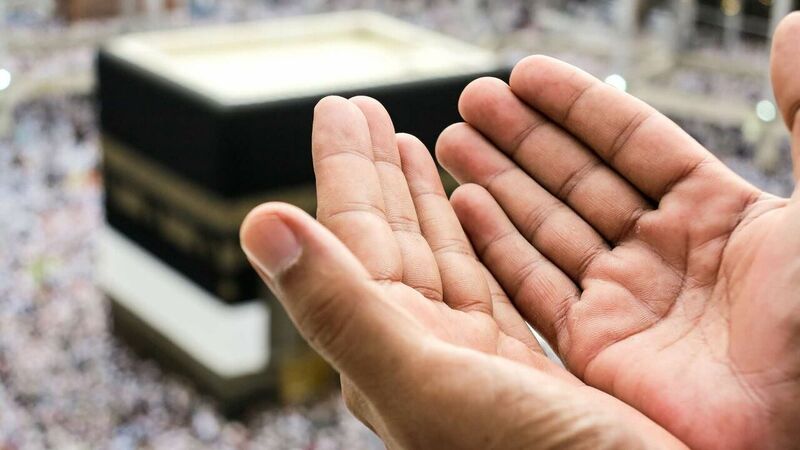
Our understanding of Allah can sometimes be shaped, subtly or directly, by the relationships we grew up with. Authority may have been associated with fear. Correction may have been experienced without gentleness. Love may have felt conditional. Over time, these experiences can blur into our perception of the Divine, leading us to relate to Allah through the lens of our wounds. Yet Allah is not defined by our human experiences. He has revealed Himself to us through His beautiful names and attributes. He is:
• Al-Rahman, whose mercy encompasses all things
• Al-Halim, who does not rush to punish
• Al-ʿAdl, who is never unjust
• Al-Latif, subtle in His care, even when we do not immediately perceive it
Read: 99 divine names of Allah s.w.t.
To preserve and grow in din is therefore to return to knowing Allah as He has revealed Himself, not as our wounds or past experiences may have led us to imagine Him. Allah has not left us to discover this path on our own. He has shown us the way through the life of the Prophet Muhammad s.a.w, whose relationship with Allah was forged not through ease alone, but through hardship, loss and rejection. Yet through every trial, he embodied a form of ubudiyyah (servitude and devotion to Allah) that held together truth and mercy, patience and clarity, strength and gentleness.
When Prophet Muhammad s.a.w. was hurt, he did not suppress his pain, nor did he allow it to distort his relationship with Allah. When he was rejected, he did not abandon his responsibility, nor did he force what hearts were not yet ready to receive. When he corrected others, he did so with wisdom. When he forgave, he did so with expansiveness. When he worshipped, he did so with presence. In him, we do not only find teachings but a tariqah, a way of being.
Returning to Allah therefore requires both humility and a willingness to learn. We seek guidance from scholars and teachers who are grounded in the Quran and sunnah, helping us not only to understand what to believe, but also how to live those beliefs with wisdom, balance and compassion.
As this return unfolds, acts of worship begin to take on a different quality, not as obligations carried under pressure, but as moments of genuine return:
• Dua becomes a space where we can speak honestly, without fear of judgement.
• Solat becomes a place of grounding, even if concentration comes and goes.
• Dzikr becomes a quiet anchoring in moments when the heart feels unsettled.
As our understanding of Allah deepens, so too does our iman. Faith is no longer measured only by what we do, but by what those acts cultivate within us: a growing ability to hold what is difficult without collapsing into despair, and a deepening readiness to submit, not out of force, but out of recognition.3
What began as an attempt to make sense of pain gradually becomes something greater: a journey of drawing closer to Allah. Not because the pain itself was good, but because through it we were invited to seek Him, know Him and place our trust in Him once again.
Conclusion: Returning, one step at a time
"…I only complain of my distraction and anguish to Allah…”
(Surah Yusuf, 12:86)
Perhaps we return to where we began, not because the journey has ended, but because we now understand the beginning differently. The words of Prophet Ya’qub are no longer only a description of pain. They become a way of holding it. A way of carrying what feels heavy without allowing it to consume us. A way of continuously returning the heart to Allah (inabah), even when clarity is still unfolding.
Healing is not a single moment of change, nor a straight path toward resolution. There may still be moments of difficulty, conversations that remain unresolved, emotions that return unexpectedly. Yet something has already changed. We are no longer where we once were. We are more aware, more grounded and more intentional in how we respond. Above all, we know where to turn, with our grief, our questions and our hope. Because every sincere step towards what is right and true is held within His Mercy.
So if the question, “What do I do next?” still lingers, perhaps the answer is simply this: take the next step that brings you closer to Allah, with honesty, care and trust. In doing so, you may discover that healing and returning were never two separate journeys. They were always one and the same.
1 For an introduction to the subject of maqāṣid al-sharī‘ah, please read Jasser Auda, Maqāṣid Al-Sharī‘ah: A Beginner’s Guide, (London: The International Institute of Islamic Thought, 2018).
2 Awad, N., & Sultan, S. (2021). Cosmic Cop or Loving Lord: The Influence of Parenting on Our View of God, Submission, and Contentment. Yaqeen Institute.
3 Abdallah Rothman, Developing A Model of Islamic Psychology and Psychotherapy: Islamic Theology and Contemporary Understandings of Psychology, (New York & London: Routledge, 2022), p. 121.
Articles on Muslim.Sg may be reproduced electronically or in print with prior permission from Muslim.Sg. Proper credit must be given to the author(s) and Muslim.Sg.