



Majlis Ugama Islam Singapura
Friday Sermon
30 October 2026 / 19 Jamadilawal 1448H
The Qur’an Illuminates the Heart, Beautifies the Character
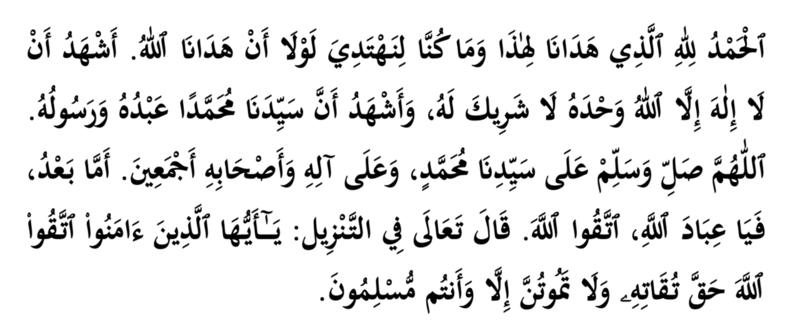
Zumratal mukminin rahimakumullah,
Let us observe taqwa towards Allah s.w.t. by fulfilling all His commands and avoiding all His prohibitions. May the taqwa we carry today be a source of joy for us in the Hereafter. Amin, ya Rabbal ‘Alamin.
Dear blessed congregation,
Allah s.w.t. describes the Qur’an; the Kalamullah (Word of Allah), with majestic attributes, among them: nur (light), huda (guidance), syifa’ (healing) and tazkirah (reminder).
These attributes prompt us to assess our relationship with the Qur’an. Has it truly become the light of our lives, guidance when we make life decisions, healing for our spirit and hearts, and a reminder that shapes our character? Or are we still stuck at mere verbal recitation?
Allah s.w.t. says in Surah Muhammad, verse 24:

Which means: “Do they not then reflect upon the Qur’an, or are there locks upon their hearts?”
At times, our weaknesses and shortcomings prevent us from internalising and practising the Qur’an’s teachings as best we can. Therefore, our effort to draw close to the Qur’an must go hand in hand with efforts to improve ourselves and purify our hearts, so that Kalamullah continues to be a torch that lights our lives and beautifies our character.
Dear congregation,
The Qur’an invites us to recognise our weaknesses, while also realising the potential for good that Allah has bestowed upon us. Let us reflect on four reminders from the Qur’an that guide our efforts to improve ourselves and beautify our character.
First: Being humble
Allah s.w.t. describes the human tendency to feel self-sufficient in Surah al-‘Alaq, verses 6-7, which means: “Know! Indeed, man transgresses, because he sees himself as self-sufficient”, and the tendency to argue in Surah al-Kahf, verse 54, which means: “And man is the most argumentative of all.”
Brothers, let us approach the Qur’an with open hearts, ready to accept correction and improve ourselves, even when its guidance challenges our habits or desires.
Second: Training patience
Allah s.w.t. describes man as often hasty in Surah al-Isra’, verse 11, which means: “...and man is ever hasty,” and impatient when afflicted with hardship in Surah al-Ma’arij, verses 19-21, which mean: “Indeed, man was created anxious; when adversity touches him, he is impatient...”
Dear congregants, internalising the Qur’an requires patience. Take time to understand its meaning, reflect on its lessons, and practise it step by step.
Third: Cultivating gratitude
Allah s.w.t. describes the ungrateful nature of man in Surah al-‘Adiyat, verse 6, which means: “Indeed, man is very ungrateful to his Lord”, and his excessive love of wealth in Surah al-Fajr, verse 20, which means: “And you love wealth with immense love.”
Dear brothers, be grateful for the blessing of the Qur’an’s guidance by internalising its teachings, and do not let busyness and worldly desires distract us from it.
Fourth: Beautifying character
Allah s.w.t. describes man’s stinginess in Surah al-Isra’, verse 100, which means: “Say, ‘If you possessed the depositories of the mercy of my Lord, then you would withhold out of fear of spending.’ And man has ever been stingy.”
Brothers, let the Qur’an be the guide to beautifying our character. It is to be read, understood, and translated into care, generosity and kindness towards fellow human beings.
Dear congregation,
Whatever our weaknesses, let us keep drawing close to Kalamullah and improving ourselves by its teachings. May the Qur’an become a light that illuminates our hearts, guides our steps, and beautifies our character. Amin, ya Rabbal ‘Alamin.
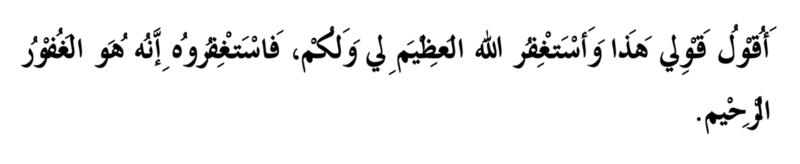
Second Sermon