



Majlis Ugama Islam Singapura
Friday Sermon
5 June 2026 / 19 Zulhijjah 1447H
Tadabbur - One Verse, Endless Guidance
Zumratal mukminin rahimakumullah,
Observe taqwa towards Allah s.w.t. Fulfil all His commands and refrain from all His prohibitions. May Allah s.w.t. ease our journey towards attaining His pleasure, forgiveness, and Paradise. Amin, ya Rabbal ‘Alamin.
My beloved brothers in faith,
Throughout this month, the Friday sermons seek to invite all congregants, young and mature alike, to become acquainted with the Quran through the approach of tadabbur (deep reflection). The sermon begins by calling us to ask ourselves honestly: When was the last time we read the sacred verses of the Quran and felt as though they were speaking directly to our hearts?
Some may wonder: Is this really possible? How can the Quran speak to us? The answer, my beloved brothers, lies in reflecting deeply upon every verse we read and thinking: How does this verse relate to us, and what lessons can we apply in our daily lives? This is the true meaning of tadabbur.
Respected congregants,
Although the Quran contains more than 6,200 verses, the sermon today will present only three brief verses. Yet, they are sufficient to highlight how exceptional the tadabbur approach truly is.
Let us begin with the very first revelation, namely the opening verse of Surah Al-'Alaq. Allah s.w.t. says:
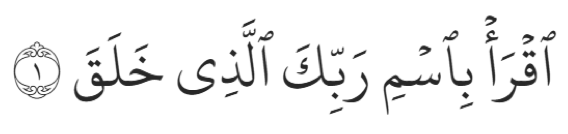
Which means: "Read in the name of your Lord who created."
My dear brothers, if we were to approach this verse solely through its translation, it is quite likely that we would take away only one lesson from it: that Allah commands us to say bismillah before reading.
However, if we were to approach it through tadabbur, we would ask further questions:
Why was Allah’s first command, “read”, and not “worship” or “prostrate”? Because it reminds us that Islam is built upon the foundation of knowledge, and sound worship cannot take place without sound and firm understanding.
Why did Allah command an unlettered person to read?
Because it reminds us of Allah’s greatness. He is able to elevate an unlettered man to become the greatest teacher humanity has ever known.
Why is the command to read linked to the name of Allah?
Because it reminds us that every pursuit of knowledge must begin with bismillah; with the remembrance of Allah. It reminds us that all forms of knowledge come from Allah, and that the search for knowledge must be accompanied by consciousness of God and sincerity towards Him.
Why does Allah mention creation immediately after commanding us to read? Because it reminds us that Allah is the Creator of all things, including knowledge itself.
Then, in the second verse, Allah s.w.t. says:

Which means: “(He) created man from a clot of blood.”
Why does Allah mention that He created us from ‘alaq — a clot of blood? It is to demonstrate His greatness: that from a mere clot of blood, something utterly insignificant, Allah shaped us into beings with remarkable abilities. Through His power and guidance, Allah has honoured us, bestowed upon us intellect, and granted us the dignity of being human.
Subsequently, in verse 3 of Surah Al-'Alaq, Allah s.w.t. says:
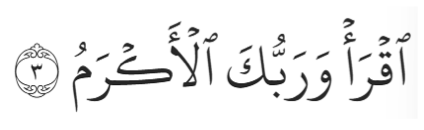
Which means: “Read and your Lord is Most Generous”
Why does Allah repeat the command “read” for a second time? This repetition reinforces the divine message regarding the importance of seeking knowledge. Allah’s repetition of the command to read – that is, to pursue knowledge – within the very first verses ever revealed, demonstrates that Allah’s command to read and become a person of knowledge, form the foundation of our faith in Allah. Knowledge is a foundation that precedes the acts of worship and devotion through which we submit ourselves to the One and Only God.
Beloved brothers,
This is the effectiveness of tadabbur. Three brief verses, yet they offer profound pearls of reminder and counsel that speak to the heart of the believer in a beautiful and meaningful way. This is also what inspires a believer whose heart is attached to the miracle of the Quran.
In summary, let us think about the four approaches to the Quran – Tilawah (recitation), tahfiz (memorisation), tafsir (exegesis), and tadabbur (reflection) – through the analogy of looking at the moon on a clear night.
Tilawah is like looking at the moon with the bare eye. We gaze upon it, appreciate its beauty, and spend time admiring it.
Likewise, through the recitation of the Quran, we read the words of Allah to draw closer to Him.
Tahfiz, on the other hand, is like someone who knows the moon so well that he can recall its form and appearance without even looking up at the sky. Similarly, through memorising the Quran, the verses of Allah are preserved in one’s memory and carried wherever he goes.
Tafsir is like studying the moon in greater depth through the guidance of experts. Through this, we understand why its shape changes and how its phases occur. Likewise, tafsir helps us understand the meanings, context, and intended messages of the verses of the Quran more clearly.
Whereas tadabbur is the act of arriving at understanding through observation and reflection. It is like a person standing beneath the glow of the moon and asking himself: “What does Allah want me to learn from this sight?” He then realises how small he is, how great Allah is, how swiftly time passes, and what the purpose of his life truly is. This is what we sought to appreciate earlier through our tadabbur or reflection on the first three verses of Surah Al-‘Alaq.
Blessed congregation,
Let us sincerely and humbly pray to Allah s.w.t. to grant us the time and lifespan, and to open the eyes of our hearts, so that we may experience the greatness of tadabbur and its positive impact upon our lives. Amin, ya Rabbal ‘Alamin.

Second Sermon