


Majlis Ugama Islam Singapura
Friday Sermon
12 June 2026 / 26 Zulhijjah 1447H
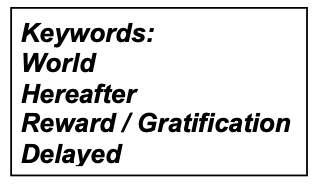
Delayed Gratification – A Quranic Concept
Dear blessed Friday congregation,
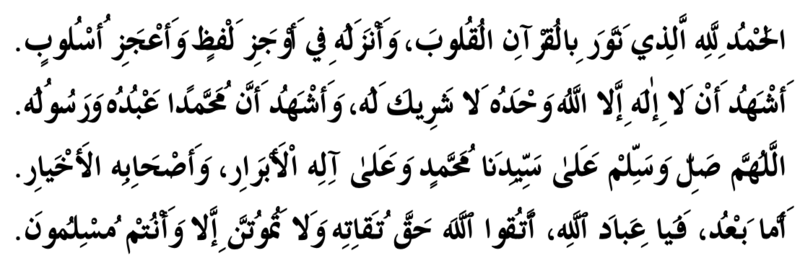
Let us nurture taqwa in our lives. Obey all the commands of Allah s.w.t. and avoid all that He has forbidden. May the light of the Quran continue to illuminate our journey towards the pleasure of Allah s.w.t. Amin, ya Rabbal ‘Alamin.
Beloved congregation,
Last week, the sermon began the tadabbur series by reflecting on Allah’s command in the first revelation, Surah Al-‘Alaq. As a continuation, this week’s sermon invites us to reflect on two verses from the Quran in Surah Al-A‘la, verses 16–17. Allah s.w.t. says:

Which means: “But you prefer the life of this world, even though the Hereafter is better and more lasting.”
In line with the approach of tadabbur, let us reflect: what is the connection between these verses and the way we approach our lives in this world?
At first glance, these two verses describe the natural tendency of mankind to be more easily attracted to the fleeting life of this world, while Allah s.w.t. has already affirmed that the Hereafter is better. However, upon deeper reflection, further questions arise:
Why do we tend to prioritise worldly comforts and pleasures, even when we believe in life after death?
Because the world feels closer. It is visible, tangible, and immediately experienced, whereas the reward of the Hereafter, as beautiful as it is promised, is yet to be perceived by our senses.
Subsequently, why does Allah s.w.t. grant us the enjoyments of worldly life, while emphasising that the Hereafter is better?
Because this worldly life has been presented to us as a test, a measure of our ability to navigate it with full awareness and responsibility, or whether it leads us into heedlessness and injustice, to ourselves or to others.
Then, does this verse command us to abandon worldly affairs altogether, and devote ourselves solely to the Hereafter?
Certainly not, because the Quran also affirms that a believer acts responsibly and does not neglect his worldly duties. Allah says in Surah Al-Qasas, verse 77:

Which means: “And seek, through what Allah has granted you (wealth), the abode of the Hereafter, and do not forget your share of this world.”
Dear brothers,
Here, we come to understand something deeper than a mere comparison between this world and the Hereafter. Indeed, verses 16–17 of Surah Al-A‘la illustrate that human beings often choose what is immediately enjoyable, while a greater reward awaits those who are patient and who submit to the decree of Allah s.w.t.
In essence, the syariah trains the human soul to recognise and prioritise the greater reward with Allah s.w.t.
For example, why does Islam teach us to lower our gaze, even though our desire often directs us towards immediate pleasure? Why does religion instruct us to avoid unlawful sources of income, such as gambling or trade in forbidden and harmful goods, even though they may appear easier and quicker in generating profit? Why does religion encourage patience and forgiveness in moments of anger, even though it is easier to lash out and release the emotions that build up inside?
In all these situations, we are being trained to sacrifice immediate desires, and in doing so, choose a greater and more meaningful reward. This is what we may understand as a Quranic concept: a deferred reward, also known in today’s language as “delayed gratification”. In reality, this concept has long been established by the Quran through the commandments of Allah s.w.t.
Dear blessed congregation,
These two verses from Surah Al-A‘la present a concept that is in fact very close to our daily lives. Indeed, it is something which we face every single day.
In today’s world, we are constantly confronted with choices: between immediate gratification and more lasting reward. We face it in how we use our time, how we spend our wealth, how we direct our attention, and how we regulate our emotions.
For example, in our free time, do we choose activities that bring long-term benefit, or merely pursue immediate entertainment and satisfaction? When our relationships are tested, do we choose calmness and understanding, or immediate reactions which may lead to bad consequences?
This is the reality of the concept of “delayed gratification” in our lives today. It should shape our interactions at home, at work, at school, even in the usage of our smartphones, and in every small decision we make each day.
So reflect upon this: have these two verses, which we often hear, truly been understood and internalised, such that they bring about positive change in our lives?
Dear blessed congregation,
Indeed, this world and the Hereafter are not two separate paths. We are not commanded to choose between one or the other. Rather, every effort we make in this world, such as caring for our families, earning a lawful livelihood, seeking knowledge, and restraining ourselves from sin, can become a path which connects this world to our Hereafter, if done with the intention of seeking the pleasure of Allah s.w.t.
May Allah s.w.t. grant us hearts that can evaluate and make decisions with consideration of the Hereafter, without neglecting our roles and responsibilities in this world. May Allah s.w.t. make us among His servants who are patient and strong in restraining desires, and steadfast in choosing the path that is pleasing to Him. Amin, ya Rabbal ‘Alamin.

Second Sermon